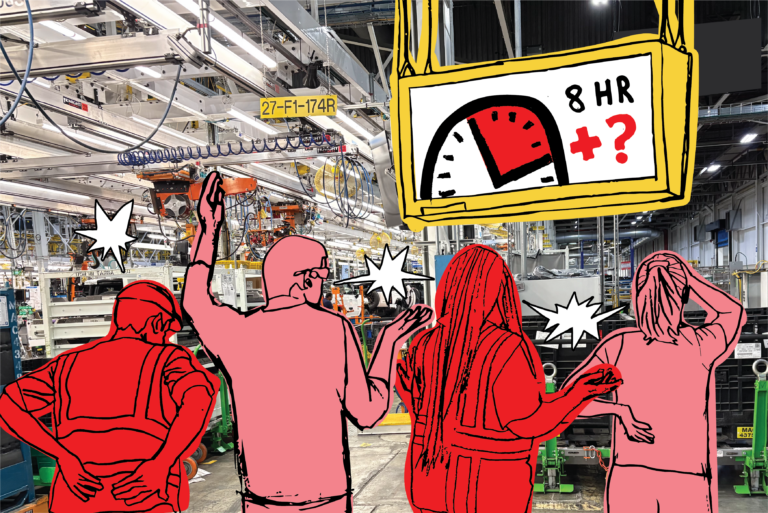
“Just Fucking End It!”: Walkouts over Forced Overtime
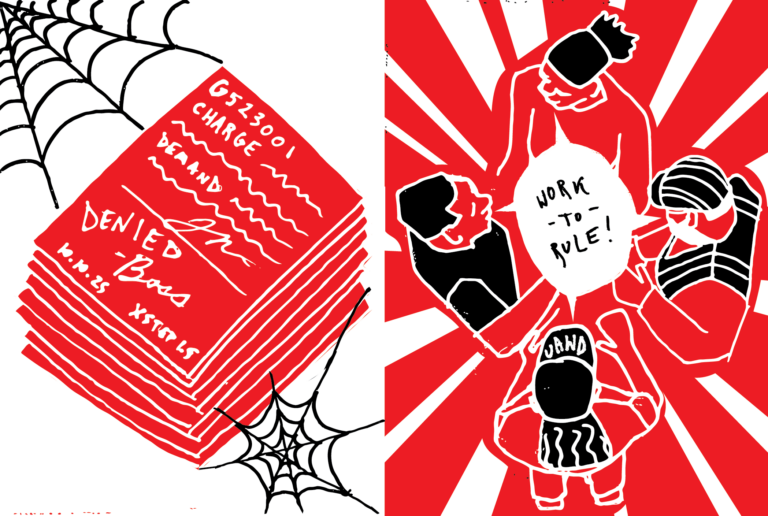
Workers are walking out at non-union Toyota plants in Alabama in response to forced overtime and rotating shifts. Can the fight to take back our time be a lightning rod for union campaigns?
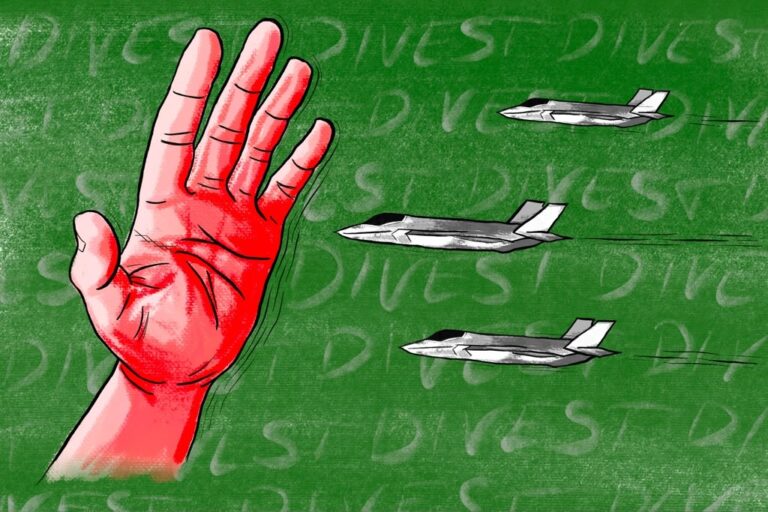
For the US labor movement, the UAW’s divestment from Israel bonds, decided by members at the union’s 39th Constitutional Convention, in June 2026, after decades of rank-and-file organizing, marks a significant step toward making international solidarity a reality—but there’s still a long way to go.
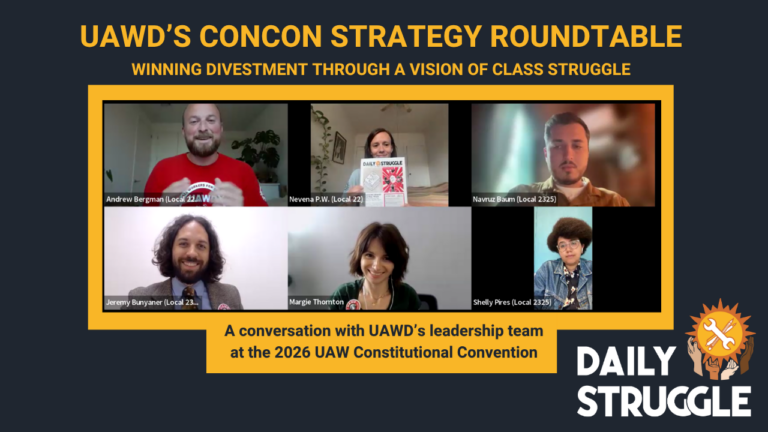
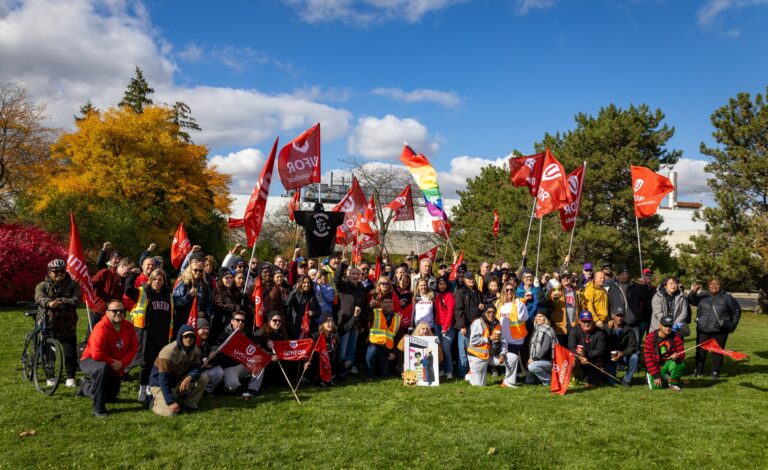
The six leaders of UAWD’s team at the 2026 UAW Constitutional Convention discuss the class-struggle strategy that enabled UAWD to lead the effort to divest the UAW from Israel bonds. Standing on the shoulders of decades of Palestine solidarity organizing, the win was made possible through the past year of organizing Local UAWD Chapters grounded in shop-floor struggle and the development of a UAWD ConCon program, which featured resolutions to enable rank-and-file militancy to fight layoffs, fight ICE, and in support of Palestine.
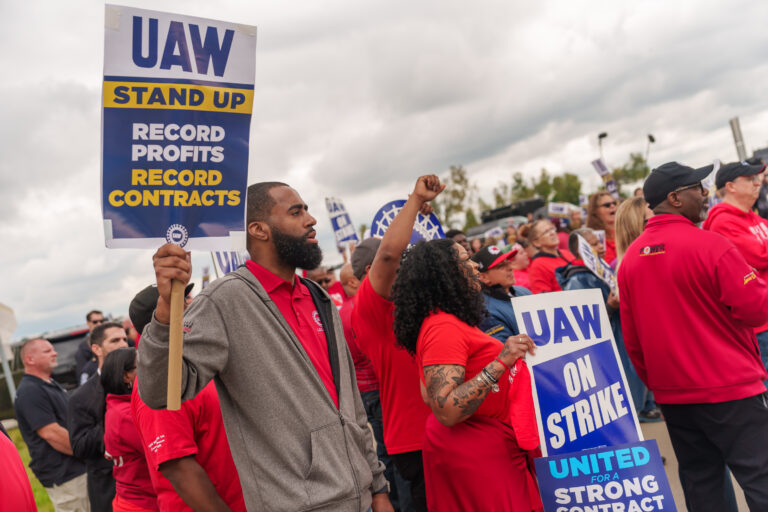
UAWD Steering Committee members present a deep dive into Shawn Fain’s presidency, through the lens of the pressures to deliver on the Stand Up Strike and the co-optive trap of bureaucracy. Fain has turned away from class struggle unionism, failing to follow through on his refreshing shift toward militant rhetoric and his influential push to reinvigorate the idea of a mass general strike. UAW members should understand Fain as the more progressive face of the old-guard Administration Caucus. Though he was elected to put an end to their stranglehold, Fain has instead re-entrenched his former antagonists and been realigned as their new leader.
Stellantis is shutting down its Brampton, Ontario, plant, devastating a Canadian community while saying it is sending jobs to the U.S. Instead of enabling Stellantis to execute on its whipsawing playbook, UAW leadership and U.S. autoworkers should unite with Unifor and Canadian autoworkers. Our union should be promoting a class struggle strategy of resisting plant closures by exerting control over production and building cross-border worker solidarity.
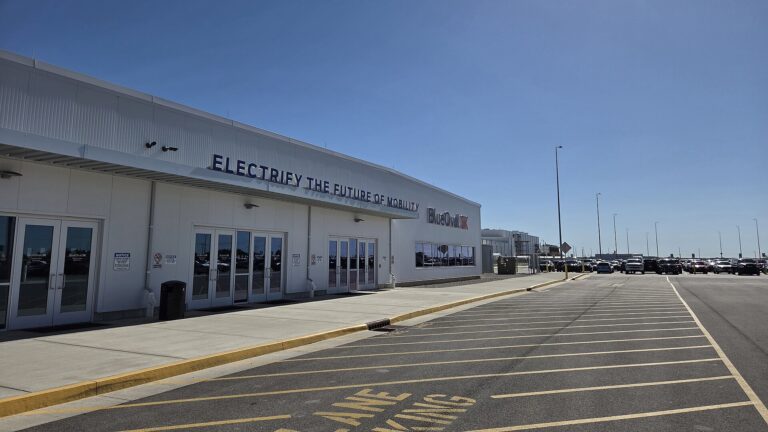
Workers at BlueOval SK, who recently unionized with UAW, lost their jobs in February as the joint venture between Ford and Korean battery manufacturer SK On was dissolved and as Ford pivots from EV battery to energy storage manufacturing. UAW members can build the capacity to challenge plant closures through a sectoral strategy that combats whipsawing and enables workers to fight for one another.
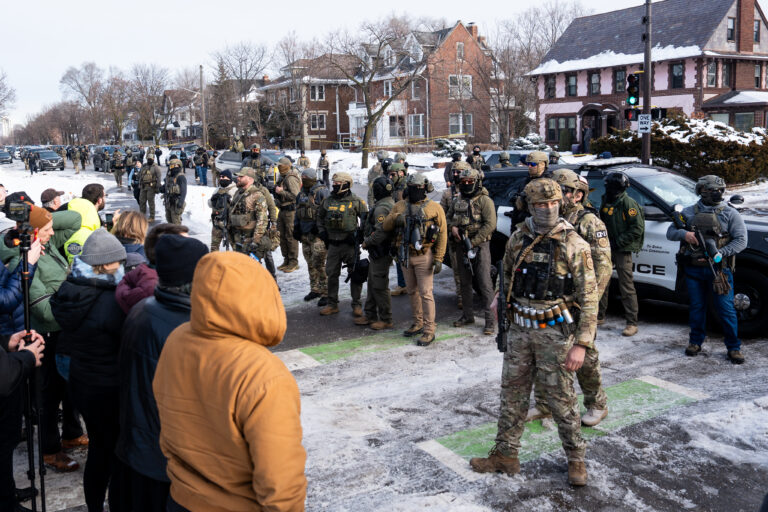
In the wake of mass anti-ICE mobilization in Minneapolis, UAWD members in Local 2325 have organized for a strike authorization vote to prepare for mass, democratic, labor action. Members in other locals and unions can use that same blueprint to build towards the broad-based working-class power required to defeat ICE.
It’s time for the labor movement to stop glorifying the grievance procedure and start understanding its role in pacifying the rank and file. Union members need to take grievances out of the office and onto the shop floor, using them as just one tactic in a larger strategy for workers to exert more control on the shop floor.
Layoffs are devastating to us as workers, but we’re trained to think of them as inevitable or even “natural.” If we understand the corporate profit-seeking that drives layoffs, we can fight for our jobs.
The recent large-scale layoffs across General Motors plants and beyond are raising questions for workers everywhere. We can accept the boom-and-bust corporate logic of the auto industry, or workers can fight to win real layoff protections and control over how reductions in work are carried out, by collectively deciding how we share remaining work.