Class Struggle in Practice: UAWD Training Builds Shop-Floor Power
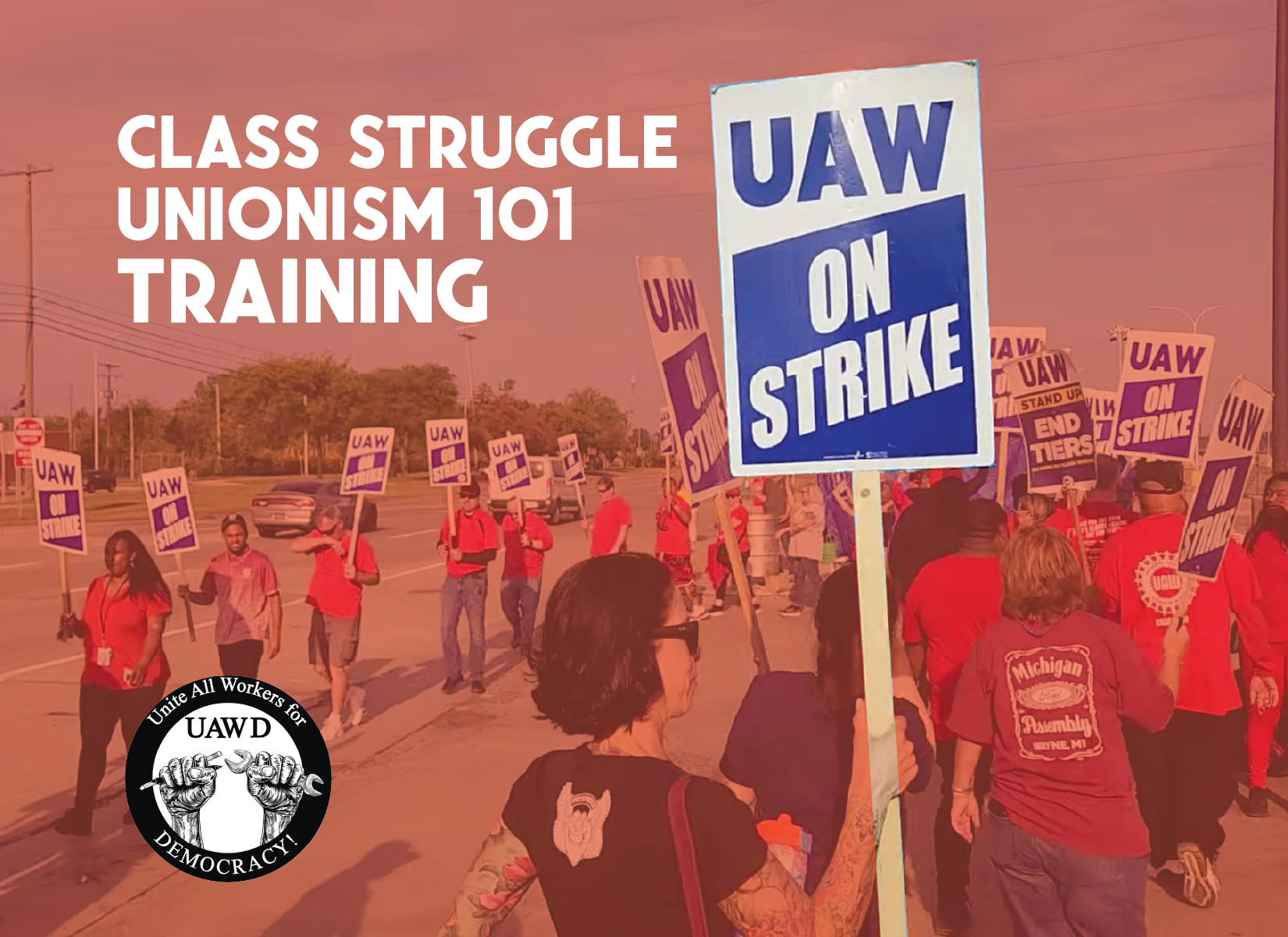
UAW members from across sectors came together for UAWD’s Class Struggle Unionism 101 Training, sharing concrete tactics and examples of how they’ve been used to build power on the shop floor, escalate fights, and take on the bosses and capitalist class.
In March 2026, Unite All Workers for Democracy (UAWD) brought together rank-and-file UAW members from across sectors—auto, higher education, IPS, agricultural implements, legal services, the public sector, and more—for a training on class struggle unionism. The session grounded participants in the fundamentals of building a class struggle labor movement rooted in worker control, militancy, and solidarity—core principles of the UAWD Member Platform.
From there, the training turned to how to organize one-on-one with coworkers, build strong organizing teams, map workplace issues, plan for escalation, and ultimately win fights against the bosses and capitalists. Led by stewards and rank-and-file leaders with years of shop-floor experience, the training emphasized that fighting to win back what the capitalist class steals from us isn’t an abstract ideal but a concrete program that can be put into practice now through deliberate, collective action by workers on the job.
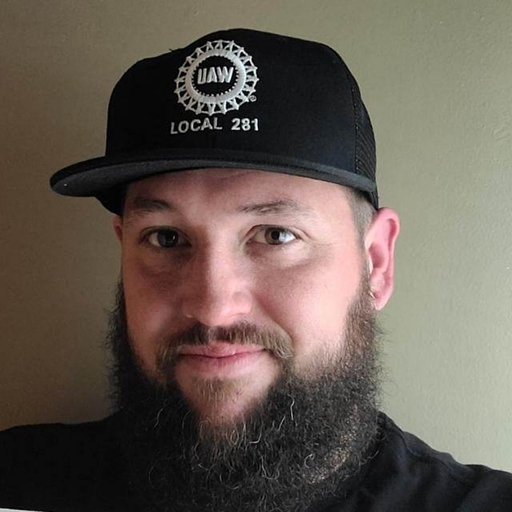
UAWD members from shops around the U.S. grounded these lessons in their own experience of leading campaigns in their locals. Nolan Tabb, a 15-year member of Local 281 and worker at John Deere in Davenport, Iowa, described how workers are organizing to abolish the company’s divisive performance pay system, which ties wages to management-controlled metrics and pits workers against each other. Starting from one-on-one conversations, workers built a campaign that reframed the issue and are now preparing to fight for straight wages in upcoming contract negotiations.
Nevena Pilipović-Wengler shared two examples from her organizing as a Local 22 member and committeeperson at GM’s Factory Zero in Detroit: a petition campaign to end mandatory overtime that, while not immediately successful, got 850 signatures and helped to build a broad base of newly engaged workers; and a coordinated work-to-rule campaign that successfully ended overwork by backing grievances with collective shop-floor action.
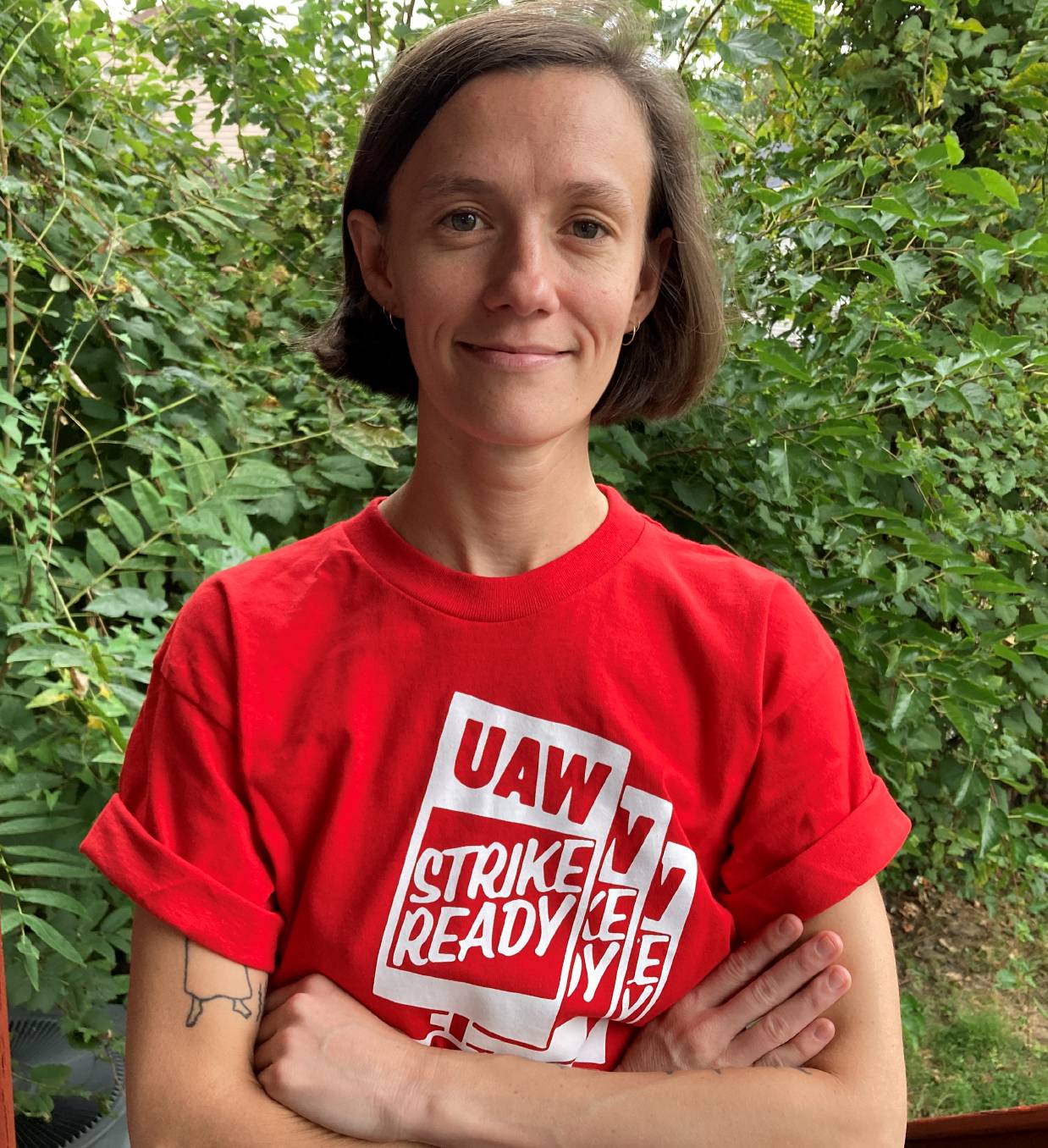
Estefania Rodriguez, a paralegal and member of Local 2325, highlighted parallel efforts in New York’s legal services sector, where workers built a sectoral bargaining campaign by developing contract action teams that united workers across employers.
Together, the historical and economic analysis, concrete organizing tactics, and examples of actions that UAW members have already been taking painted a clear picture: the bosses and the capitalist class have escalated their attacks on workers through low wages, long hours, and intensified work—but by organizing and fighting shoulder-to-shoulder with our coworkers, the working class can reclaim control over our lives.