Ford Busts Union and Fires 1,600 Workers as Kentucky BlueOval SK Plant Closes—How Can the UAW Fight Back?
Workers at BlueOval SK, who recently unionized with UAW, lost their jobs in February as the joint venture between Ford and Korean battery manufacturer SK On was dissolved and as Ford pivots from EV battery to energy storage manufacturing. UAW members can build the capacity to challenge plant closures through a sectoral strategy that combats whipsawing and enables workers to fight for one another.
This article is published together with a detailed case study examining the Kentucky BlueOval SK plant closure. Follow our ongoing series of case studies of recent layoffs impacting thousands of UAW workers across auto and other manufacturing sectors, and submit a layoff report about your plant here.
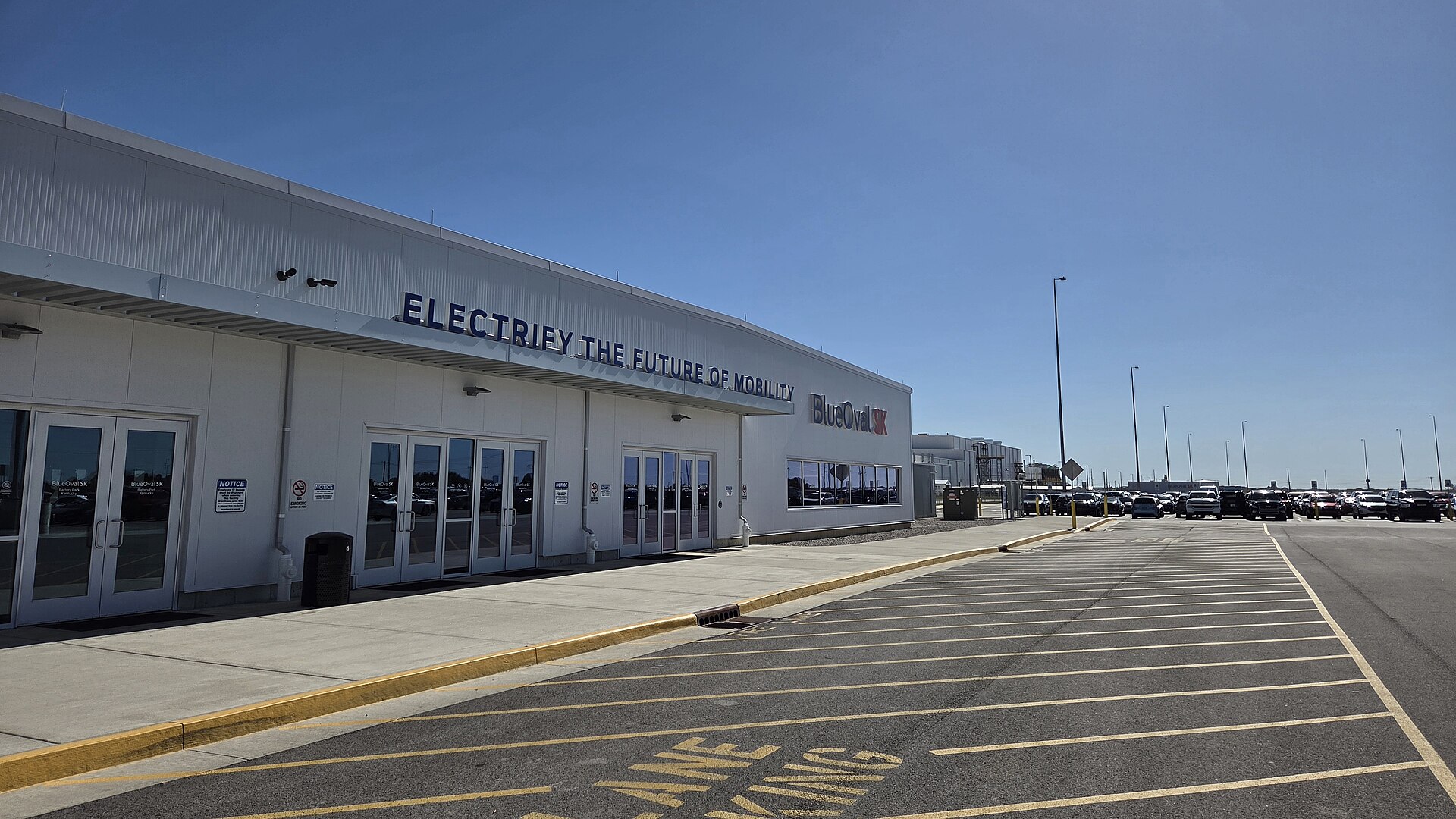
“It’s clear to me that they don’t value me or this community at all.” These were the words of a BlueOval SK (BOSK) module process operator at a UAW rally on February 11, 2026, in Glendale, Kentucky. Workers had gathered to deliver a petition signed by over 1,000 workers and community members demanding that Ford recognize the UAW and negotiate over the future of the town’s BlueOval plant. Just days later, the company shut the plant down and terminated over 1,600 jobs.
After the Trump administration reversed existing policies, cutting funding for electric vehicle manufacturing, Ford and SK On decided to dissolve BOSK. The plant, which was set to manufacture EV batteries, is now pivoting to making batteries for energy storage, including for data centers driven by the AI boom. Workers, many of whom moved to the area to work at the plant, will be left without a job and without benefits until at least 2027.
In August, workers at BOSK narrowly won a unionization vote, 526 votes in favor to 515 against. The company contested the election, but the National Labor Relations Board ruled in January in favor of the union. Despite this win, the company is using the dissolution of BOSK to reject unionization.
At the February rally, workers described feeling betrayed by the company, and also reflected on the long road they had to travel just to win union recognition. Describing the unsafe working conditions that workers at the plant had had to deal with over the last year, another worker recounted: “I was stuck in a building full of bat feces and urine, and I was already seeing unfair supervisors and how they were treating us. A few of my coworkers approached me out in the parking lot and everything that they said that was wrong with the situation aligned with what I was feeling. At that point I decided that we needed a union and that I was going to be a part of it.”
Building a fighting union through a sectoral strategy
Ford’s decision has already had a huge impact on the surrounding community. The BOSK plant is located in Hardin County, Kentucky, which has a population of about 100,000. The community had anticipated a huge influx of jobs that have now been abruptly withdrawn. As Nolan Tabb and Rob Lett discuss in Daily Struggle, our union needs a sectoral strategy to resist the corporate move to take advantage of small, often economically depressed towns—a predatory approach that gives management leverage over workers who have no choice but to agree to their demands due to a lack of other work in the region.
The only viable response is to get organized as an entire manufacturing sector around shared demands. If we let Ford summarily change the terms of employment, terminating workers and lowering pay and standards, just because they reclassify auto workers as battery workers, then we’re all at risk of being carved out of our hard-won union contracts. We have to act together as a working class and refuse to let bosses divide us by race, gender, ability, or what type of work we do and when we were hired.
Why should a large group of workers abruptly be kicked to the curb just so Ford can maximize profits? The UAW—and all of organized labor—needs to flat out reject the “right” of capitalists to be “profitable” or “competitive” at workers’ expense. That means that UAW leadership needs to begin organizing members to fight for one another, and that requires doing more than just issuing statements from the union’s leadership. The new contract at Volkswagen is a step in the right direction, but we need to go much further as a union, investing in the working class by giving workers the resources and control to build an organization from the bottom-up that connects rank-and-file members politically and culturally, across companies and regions.
We need to transform our union into a collective organization—a class struggle union—that enables us to strategize together and strike or slow down production when our coworkers are being targeted. By engaging in actions to defend workers at other plants, we lay a foundation to ensure that those workers will be ready to fight for us when it’s our turn to be targeted.
Resist the restructuring!
With tariffs, EV policy reversals, and growing market competition abroad, the North American auto industry is in the midst of a serious restructuring. Just last month, General Motors laid off about 3,400 workers at their EV assembly and battery plants. Stellantis has scrapped plans to open a battery plant in Belvidere, Illinois. The Ford BlueOval Battery Park in Michigan also reduced EV battery production and is pivoting to residential energy storage manufacturing.
Workers should be in control of our workplaces and livelihoods, not be subject to the whims of auto companies chasing profits and shifting to manufacture energy storage devices.
In 2023, top UAW leadership announced that, by winning the right to strike over plant closures, we’d made a huge leap in the ability to defend our jobs. But if our leadership doesn’t enable rank-and-file workers to share their struggles with one another so that we can build a shared commitment to strike for one another, then the contract language will become nothing more than an “empty promise.” Instead, let’s use the job security language we have to support a fightback strategy!
Workers should not have to suffer from the boom-and-bust cycles of the auto industry or from changes in production strategies—but we will, unless we build up militant unions with leaders and rank-and-file members who are ready to fight layoffs by contesting management’s unilateral control over production and employment levels. Workers should be in control of our workplaces and livelihoods, not be subject to the whims of auto companies chasing profits and shifting to manufacture energy storage devices.
What we need is a worker-led labor movement with a sectoral strategy for the entire auto industry, as well as newly emerging sectors, spanning from the Midwest to the South and across national borders.
Layoffs at your plant? Report what’s happening and we’ll publish it to help workers understand changes to our industry.
Photo Credit: Ash.tahno