Motown and the Making of Working-Class Revolutionaries: an Interview with Jerome Scott and Walda Katz-Fishman
Jerome Scott and Walda Katz-Fishman, authors of Motown and the Making of Working-Class Revolutionaries: The League of Revolutionary Black Workers, share their reflections on the UAW’s Black radical tradition, the tactic of the wildcat strike, and the importance of unions fighting for the working class as a whole.
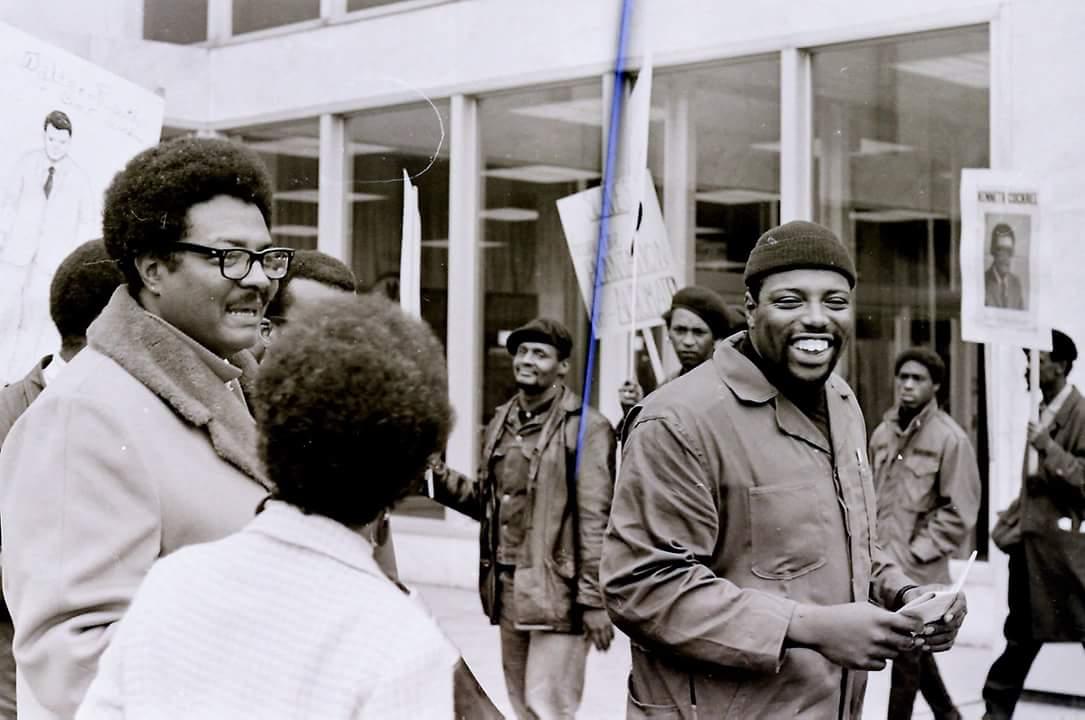
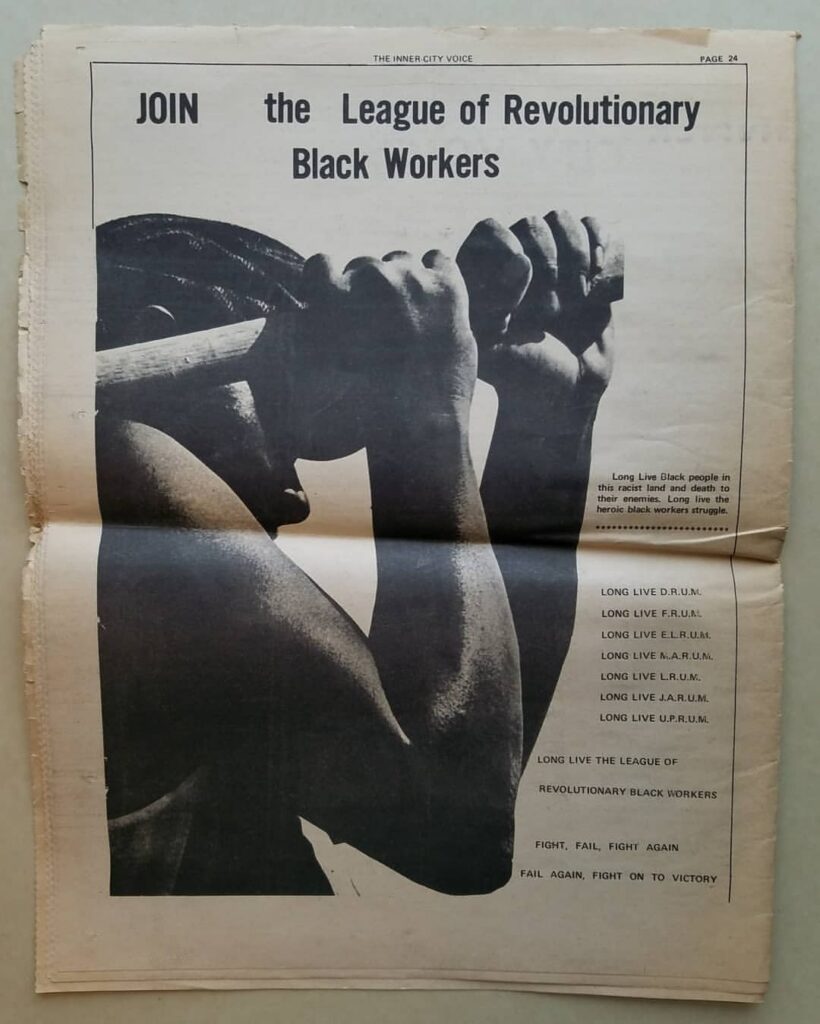
In the 1960s, Chrysler—the only Big Three corporation whose operations remained largely in Detroit at the time—began to hire Black workers, many fresh from the U.S. South. They had the worst and most dangerous jobs, and Chrysler frequently fired them before they obtained UAW contract protections after a 90-day probation. In 1968, these conditions and the lack of representation by the white-dominated UAW—at that time led by Walter Reuther, whose “Administration Caucus” dominated the union then and for decades after his death led to a wildcat strike in the Dodge Main plant initiated by the Dodge Revolutionary Union Movement (DRUM) (A wildcat strike is a strike not officially authorized by a union). A number of other RUMs were then created around Detroit, and in 1969 the League of Revolutionary Black Workers (LRBW) was founded by Black militant labor organizers to help unite and aid struggles around the city. Among those organizers was Jerome Scott, who, along with Walda Katz-Fishman, has written an account of the LRBW, based on extensive interviews with surviving members of the League, their families and comrades. Their book, Motown and the Making of Working-Class Revolutionaries: The Story of the League of Revolutionary Black Workers, is available from University of Georgia Press.
—Anthony Stoner, UAW Local 4811
Anthony SToner: Why were wildcat strikes the tactic both DRUM and then the LRBW focused on? What’s the role of a wildcat strike for today?
Jerome scott: The wildcat strike became our principal tactic mainly because it was a two-edged sword. We could attack the company as well as struggle with the union. The company of course was and is the major enemy, but back in the day, and in some unions even today, the collaboration between the union and the corporation is not good for the workers themselves. And so we realized after the first wildcat strike (for us, and the first in the country for about fifty years) at Dodge Main that that wildcat strike really did attack both of our struggles. What we didn’t realize when we started it was that it was also a very offensive tactic. We were making the decisions; and the corporation and the union had to respond and defend against that, rather than the workers always being on the defensive. So the wildcat strike was a hell of a weapon.
AS: How did Doug Fraser [then head of UAW Chrysler Department] and the UAW International use the “flying squadron” during the 1973 wildcat?
JS: A little bit on the history of the flying squadron. It started with the United Mine Workers movement in Appalachia because of the rolling strikes that happened in the organizing of that union. It was an organized group of union members that they would take from strike event to strike event and try to make sure that nobody crossed the picket line. They were an apparatus that actually really backed up the picket lines in the strikes that were held in the heyday of organizing the UAW, the United Mine Workers, and so on. And the purpose was really to let the workers know that the International was part of this strike. So the concept of the flying squadron had a long tradition of respect from the union movement.
In our case, in our strike at Chrysler in 1973, we were able to shut down the entire Chrysler corporation for about a week; and that was because of the strategic nature of the Detroit Forge plant where I worked. There was only one other plant in the world that made the same parts that we made and it was a forging plant in [apartheid-era] South Africa. The corporation had done all it could do to try to break our strike, and try to break the picket line, but the picket line was going on 24/7.
What we learned later is that the corporation had called Solidarity House and said, “you have to do something about this strike.” And it was then that Fraser organized the historic flying squadron to come break our picket line rather than support it. And it was a pitched battle—it wasn’t like we saw them coming and laid down our picket signs—it was a big struggle. But eventually they were able to break our picket line and end our struggle after a week. Now the company decided that they would permanently fire three of us. But later on we learned that the company didn’t decide who to fire—the company left it up to the union to decide. They fired two Black workers and one white worker, two production workers and one skilled trades worker. The two Black workers were in the League of Revolutionary Black Workers leading up to that strike, and the skilled trades person was someone we had worked with in our plant over the previous two years. So not only did they bring out the flying squadron to break our strike, they also collaborated with the company to decide who would be permanently fired.
Now, that permanent fire for the three of us sort of backfired on them, because one of the skilled tradesmen who was out on the wildcat strike was also in the process of buying a bar across the street from the plant we had just shut down, and across the street from six other Chrysler plants up and down that block. So he hired the three of us as bartenders, and that became the best job we had ever had. Because once you shut down the corporation and people knew you were in this fight with the union and the company, they wanted to talk to us. So we had a constant flow of workers coming into the bar, having political discussions, trying to figure out how they could have a wildcat strike at their shop.
AS: Why do you think the International was acting this way—was it mostly racism, was it also their investments in the company?
JS: The 70s was a period when the unions were really trying to collaborate with corporations to have these “Joint Work Committees” on the shop floor with the foremen and the workers. They were promoting this whole idea that we could have peace in the working-class battle between the owners of the Chrysler corporation and the workers. So it was this notion, I think, that we could have this “peaceful” period, where they wouldn’t have to strike, they wouldn’t have to do the real fight for workers, but the corporation would somehow allow them to make advances.
I think there’s one other thing that played into this: early on in the 50s, unions made a decision that they would only represent their members, and not the working class as a whole, and so they saw this peaceful coexistence with the corporation as a way to support their members and separate themselves from the struggles of the working class as a whole and concentrate on just the relations between their members and the corporations as opposed to the struggles between the working class and the corporations.
WALDA katz-fishman: The workers also did some investigation, and they found out the union was actually invested in the corporation and was making more money from its investments than from the actual dues from its members. So it was not just a political collaboration, it was really an economic merging of the interests of the “union hierarchy” and the corporation. And that’s pretty extraordinary: Y’all should do some investigation today.
AS: Your book discusses the idea of union organizing for the working class as a whole rather than just representing the members of the union. Why is that important? What can we do with that today?
When you struggle for higher wages in a shop, that really does affect the whole community around it. And so if you fight and bring in the communities around the shops and bring in whatever motion around police brutality or the fight against poverty or any of those community-based fights, they’re all working-class fights.
JS: It’s more important today than it’s ever been. When the trade union movement was developing in this country, it developed on the basis of representing the working class. Back in the 30s and 40s, there were at least 9 or 10 international unions that demanded the end of capitalism as the way for workers to actually get and hold what they were fighting for. So the trade union movement has a revolutionary guts to it that they’ve been trying to stomp out ever since. I think it was during the McCarthy era in the early 50s, one of the demands that the ruling class made on the union movement—well of course, one of them was to rid itself of any communists that existed in the leadership and try to scorch its membership as well. But one of the other demands was that they had to stop trying to mobilize the working class as part of the union struggle and only concentrate on their members. And the corporations would then back off on the struggle around contracts and give them easier access to making contracts. So the leadership of the international trade union movement made that agreement. They agreed that they would concentrate on their membership.
The reason it’s so important is because when you struggle for higher wages in a shop, that really does affect the whole community around it. And so if you fight and bring in the communities around the shops and bring in whatever motion around police brutality or the fight against poverty or any of those community-based fights, they’re all working-class fights. And a trade union struggle in the middle of that can add a lot of power and prestige to those struggles as well as provide the trade union with support from the community that will also have an effect on their battle in the shop.
We have got to understand that we’re in a much more powerful position if we approach it from the standpoint of a broad-based front of struggle to organize a shop. Not just the workers in it, but their families, the community that it sits in, the drivers that service it, the whole shebang. And more or less a working-class strategy for organizing a union rather than a membership-based strategy for organizing a union.
WKF: Huge sections of the working class, the academy, professors and scientists and doctors and nurses and the whole tech industry that has not been historically unionized, are losing jobs. They’re losing jobs, job security, certainly benefits, and so we’re in a class war. And so to develop that class consciousness when the trade union movement is such a small percentage of the working class, it’s really important for us to think about the working class as a whole, and it’s really important for that section that is more highly organized to help broaden out the understanding of who we are, what our interests are in society, and how do we help lift up and help organize the working class as a whole. And I think some of the unions have played an important role—in May Day Strong, or in the call for a 2028 general strike—so we can see that they have a capacity to take some important “leadership roles,” because they do have resources and organization.
AS: How important was organizing around health and safety issues to expanding League contacts with the non-Black workers in the factory, the white workers, the skilled trade workers, and so on?
JS: Health and safety was a lot bigger than anybody thought, when you think back on it. There were two major things that were really the impetus for wildcat strikes. One of course was the way management treated workers. The whole question of white supremacy in the plants back in the 60s was just as bad as anyplace else. The foremen thought they could treat Black workers any way they wanted to, and treated us like, I’ll fire your ass in a second, if you don’t do as I tell you to do and not argue with me, not discuss with me whether or not it’s legal for me to treat you this way. The other reason was health and safety. Somebody was always getting hurt in the plant, every day. Once we began to reach out to white workers to try to figure out how to build those kinds of relationships, we realized the connecting factor was health and safety, and skilled trades workers were just as concerned that they might get injured on the job as we were as production workers.
WKF: As I recall, it was a white worker whose hand was cut off; that was the provocation for the ‘73 wildcat strike.
JS: Yep.
WKF: And what the white workers said to you all, the Black workers, we’re really glad you all have been carrying forward this fight. So once they were able to work together, it was better, the wildcat was more powerful when it was a multiracial wildcat.
There has always been multiracial struggle—there’s been Black working-class struggle but also multiracial struggle—in the South against the conditions of life there.
JS: The difference between the wildcats that happened prior to our ‘73 wildcat, which was mainly Black workers that went out and were able to shut down the process of that particular factory for a while. Our ability to shut Chrysler down for a whole week was the difference between having the vast majority of the workers in that shop support the strike versus only Black workers. So it meant all the difference in the world.
AS: Many of the League workers either themselves or their families had come from the South. Why is the South this important battleground in the class war?
WKF: What I think the League expresses is that there has always been multiracial struggle—there’s been Black working-class struggle but also multiracial struggle—in the South against the conditions of life there. There is union organizing in the South, despite Taft-Hartley, which said states can implement state-by-state right-to-work laws, which makes it almost impossible for unions to organize, so the South became the “solid South” of right-to-work. So both in terms of both working-class organizing and in terms of federal policy—economy, ecology, politics, and society, public institutions—the South is either a place where the working class breaks through or the capitalist class manages to control it and therefore the nation. And that’s why the South is such a battleground today, it’s emerging because the working class is in motion, and they know this is the place where it’s easiest for them to grab control back.
JS: The ruling class is once again relying on the fact that if they’re going to consolidate fascism in this country, they have to consolidate it in the South. And therefore they have to get rid of the Voting Rights Act, and they have to prevent unions from spreading across the South in this period where unions are really beginning to pick up again and beginning to organize.
AS: Tell me about the history of the League and its contacts with the PLO (Palestine Liberation Organization) and the Arab Workers Caucus (in the UAW in Dearborn, Michigan), especially given Israel’s genocide and the UAW’s divestment from Israel bonds.
JS: Over the last couple years, we’ve given a lot of thought to this too. We looked at ourselves as oppressed and exploited people—and Detroit and Dearborn was a special sort of area of the country. We had a bigger Middle Eastern population in Dearborn than any other place outside of the Middle East. And that was true because of the recruitment of international workers by the auto industry. They figured that cultural division might slow down the union process. But the fact was that we were working side by side with Middle Eastern folk who had migrated here to the United States and were part of our working-class brothers and sisters. When we learned that the UAW was buying Israeli bonds and that that was supporting the oppression of the Palestinian people, we reached out to our coworkers, and we even had delegations go to the Middle East and meet primarily with the PLO.
We realized it was our country, our government, that was sending all this money to Israel and soliciting our trade unions to use our pension funds, our money, to buy Israeli bonds. So not only did we develop good relations with them, but one of the wildcat strikes back in the day was a wildcat strike against the UAW continuing to buy those bonds. We didn’t appreciate our dues being used to support the oppression and exploitation of another set of oppressed and exploited people. That was the basis of our relationship, and we continued to have those kinds of relationships not only with the Palestinian people—we did the same thing with the Vietnamese people, and the Irish struggle against the British, the whole shebang of oppressed and exploited people—we tried to reach out to and let them know we were all fighting the same kind of fight, only on different fronts.
You have to return to the roots of the trade union movement and make your struggle […] a working-class issue, and any advancements, you want to be applied not only to the workers in that industry but also to the communities in which those workers live and to the section of society which those workers represent.
WKF: So internationalism was a big part of their working-class understanding of the world. It was Edna in our interviews who said what Jerome just said: We organized together because we lived side by side, in the same neighborhoods and worked together. So it was a very concrete unity, as well as an intellectual kind of unity, a political unity.
AS: What does the experience of the League contribute now to militant unionism?
JS: This is a war on the working class—it’s a war on the unions, so you’ve got to act like it’s a war—but it’s also a war on the working class as a whole. You have to return to the roots of the trade union movement and make your struggle, your contracts or whatever issue you’re fighting around, a working-class issue, and any advancements, you want to be applied not only to the workers in that industry but also to the communities in which those workers live and to the section of society which those workers represent. And so there has to be a working-class victory. And in order for there to be a working-class victory, you’ve got to mobilize and educate the working class as a whole.
That would be my message to the UAW. If they want this general strike in 2028 to actually happen and be a success, the mobilization for it has got to be a society, working-class-wide mobilization. When ‘28 comes, you might have those contracts that expire at the same time. But if you don’t have some secondary boycotts organized, if you don’t have some secondary supports mobilized around the logistics industry, then it will not be successful. So it has to be a community-wide effort if we’re going to make this general strike be an advancement for the working class in taking the offensive in this war.
WKF: The only other thing is that if it’s only about 10% of workers—and that’s workers who have jobs—who are unionized, then we’ve got to go back to our working-class roots. The trade union movement has an opportunity to really play a leadership role. But they’ve got to reach deep down to where the working class is, which is outside of the trade union movement, and figure out how to really play that role to build an organized hub of organizing.
Featured image credit: Walda Katz-Fishman.