Boom and Bust: Understanding Layoffs and the Restructuring of the US Auto Industry
Layoffs are devastating to us as workers, but we’re trained to think of them as inevitable or even “natural.” If we understand the corporate profit-seeking that drives layoffs, we can fight for our jobs.
This article is co-released with three case studies examining recent layoffs impacting thousands of UAW workers across auto and other manufacturing sectors. Follow our ongoing series of case studies here.
Case
Studies:
3,400 laid off

238 laid off (~1,500 in 2024)

600 laid off
Auto workers in the U.S. are all too familiar with the boom-and-bust rhythm of their industry. One year you’re working mandatory overtime six days a week on 12-hour shifts, and the next you’re laid off counting your money. The worst of these busts are factory shutdowns, followed by permanent or indefinite layoffs, and even temporary layoffs can have long-lasting effects on households, putting families into debt and destabilizing lives. To be able to fight layoffs and take control of work reductions as a union in the boom times when we do have leverage, workers have to develop a deep understanding of what’s driving this cycle.
At Daily Struggle, we are embarking on an effort to document and analyze layoffs and shutdowns in auto and other manufacturing sectors. While we’ll also be tracking shift expansions and new plant launches, we recognize that mass layoffs and shutdowns are what really hurt workers, and we must understand when and how they happen, and what we can do to organize in response.
To do that, we need everyone’s help in monitoring and reporting what’s happening at your plant. Fill out this form to send us a report of layoffs or shutdowns (current or future), and we’ll work with you to add it to our public set of case studies:
Now it is clear that amidst the Trump administration’s trade war, electric vehicle policy reversals, and competitive pressure from foreign automakers, the U.S. auto industry is in the process of yet another serious restructuring.
Understanding boom-and-bust cycles
The corporations point to market competition as a justification for a layoff decision that impacts thousands of families with a stroke of a CEO’s pen. The concept is so pervasive that Big Three National Agreements are riddled with loopholes, like the clause in the Stellantis-UAW contract that says that investment commitment that allocates billions and establishes job security is “contingent upon plant performance, changes in market conditions, and consumer demand” (Page 140).
The boom-and-bust dynamics are instantly evident when we zoom out to look at employment in the combined motor vehicles and parts sector, which includes parts and assembly work, and covers UAW and non-union workers. Between September 2023 and November 2025 (the latest data), overall employment in the U.S. auto sector has dropped by more than 46,000.
Essentially, the working class is again made to pay for the periodic ups and downs in the capitalist mode of production.
Now it is clear that amidst the Trump administration’s trade war, electric vehicle policy reversals, and competitive pressure from foreign automakers, the U.S. auto industry is in the process of yet another serious restructuring.
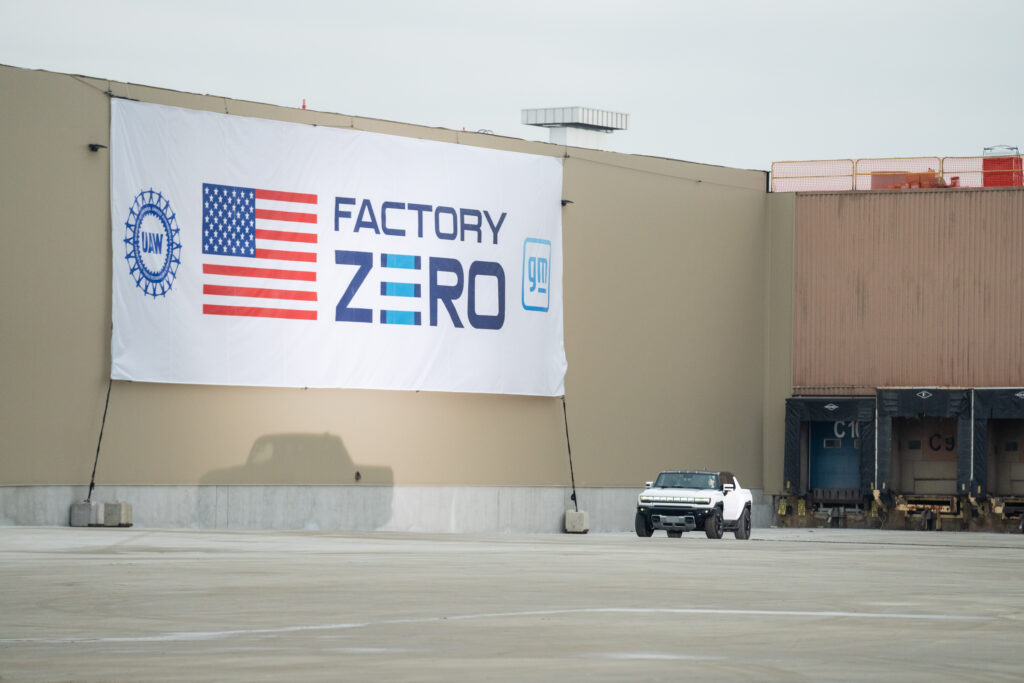
Corporations are continuing to shift production away from the Midwest to the South, where wages and labor standards are weaker and unionization rates are much lower. Entire corporations are going through serious overhauls. Stellantis has been revisiting its global strategy and now threatens to shut down or seriously downsize Canadian plants, while promising to move production and add thousands of jobs to the U.S. Nissan announced that it will shut down seven plants globally, though it’s unclear which ones, impacting about 20,000 workers worldwide. With superior technology, China is dominating the EV sector, making more than two-thirds of all EVs worldwide, even if trade policies block them from entering the U.S. for now. The EV transition is still continuing in the U.S., but in fits and starts, as strategies pivot due to fluctuating demand. Case in point: GM’s Lake Orion facility was retooled from gasoline combustion to EV in 2024, and is now being retooled again back to combustion. Meanwhile, 3,400 workers across GM’s Factory Zero in Detroit and two Ultium Cells battery facilities are being laid off starting January 2026.
The U.S. corporate EV transition has at best been chaotic, and now it may be far more limited.
Recent layoffs
After the gains of the Big Three Stand Up Strike in 2023, the corporations retaliated with layoffs. Stellantis was the worst offender, even threatening to shut down Belvidere Assembly after contractually committing to its re-opening. The UAW’s Keep the Promise campaign was able partially to reverse this decision, bringing back 1,500 jobs to build a midsize truck. However, significant contractually obligated investments were also dropped as Stellantis cancelled plans for a battery plant in Belvidere, Illinois, and a megahub for parts distribution that came with a promise to create thousands more jobs in 2028.
Exemplifying the classic whipsawing that pits workers against each other—jobs are being eliminated in Canada, with 3,000 workers at the Brampton Assembly plant receiving robocalls informing them their jobs will be moved to the US.
In October 2024, over 1,000 workers at the Warren Truck Assembly Plant were laid off after Stellantis ended production of the Ram 1500 Classic. After rank-and-file workers fought the layoffs of temporary workers, Stellantis reduced their plan to lay off over 1,000 workers down to 125 at Toledo Assembly. In November 2024, 400 workers were permanently laid off at the Stellantis parts warehouse at Freud Street in Detroit.
In October 2025, GM’s Fairfax Assembly and Stamping plant in Kansas announced that it will be indefinitely laying off 900 workers as it cancels the opening of a second shift for the Chevy Bolt EV, hedging against low EV demand. In January 2026, there will be over 4,000 GM workers laid off. Ford plans to “redeploy capital designated for EVs to models with higher profitability.”
As part of a major restructuring, Stellantis and the UAW Stellanis Department have announced that 5,000 “new jobs” will be added to its Midwest US plants. It is unclear which of these jobs Stellantis already committed to and which are new. And in turn—exemplifying the classic whipsawing that pits workers against each other—jobs are being eliminated in Canada, with 3,000 workers at the Brampton Assembly plant receiving robocalls informing them their jobs will be moved to the U.S.
In 2025, the overall unpredictable investment environment, has led to significant layoffs. We analyze three of them in detail to help understand their underlying causes and significance:
General Motors: Downsizing EV Production at Assembly and Battery Plants
3,400 laid off| January 2026
Cause: EV policy reversals; Low demand; Tariffs
John Deere: Continued Reduction in Workforce After Tariffs and Low Demand
238 laid off (in addition to ~1,500 in 2024) | August 2025
Cause: Low demand; Tariffs; High prices
Cleveland Cliffs: Reduction in Steel Production Due to Projected Low Auto Demand
600 laid off | March 2025
Cause: Weak projected auto market; Low price of steel; Tariffs
By contrast, expansion—largely by non-union auto companies—continues in the South. Hyundai committed $2.7 billion to expand a Georgia plant, which was recently the target of one of the largest single-facility raids by Immigration and Customs Enforcement to date. A Hyundai subsidiary in Alabama reportedly employed children as young as 12 in 2022.
Volvo announced a $1.3 billion investment to ramp up production in their South Carolina facility.
Union plants are able to guarantee some job security by paying workers during layoffs and through transfer rights to neighboring plants. Unfortunately, unionization is not keeping up with corporate expansion. Roughly half of vehicle assembly plants in the U.S. are now non-union, and a majority of the parts suppliers are non-union.
In response to the corporation’s profit-seeking, we must build a worker-led EV transition that prioritizes job security and aligns production toward safe transportation that centers community needs and addresses climate change.
We need everyone’s help
Daily Struggle will be tracking the ongoing restructuring of the auto industry, and we need all Locals and workers to help us understand what’s happening to our sector.
Fill out this form whenever a major change occurs at your factory, and we’ll publish the shift with an attempted explanation:
The first step to winning worker control over our industry is getting coordinated and understanding why the current system isn’t working.
What can be done?
Profit will always be the dominant decision-making factor for the corporations. However, our union has the power to fight back and win job security. Of course, it is critical that we organize the entire auto sector, but we can’t wait for a top-down approach to union drives. Workers should join Local Organizing Committees and start reaching out to neighboring workplaces.
In the upcoming UAW Bargaining Convention and Big Three negotiations in 2028, we should prioritize winning a shorter workweek, which would force corporations to hire more workers without reducing pay. A jobs bank will help keep workers employed, potentially contributing to green jobs, while their plant is on layoff or in the event of a shutdown.
In response to the corporation’s profit-seeking, we must build a worker-led EV transition that prioritizes job security and aligns production toward safe transportation that centers community needs and addresses climate change.
Reach out to us if you’d like to join a team of organizers in UAWD bringing militant energy back into their Locals to stop accepting the boom-and-bust cycle of our industry and fight for a brighter and more stable future: uniteallworkers4democracy@gmail.com.